
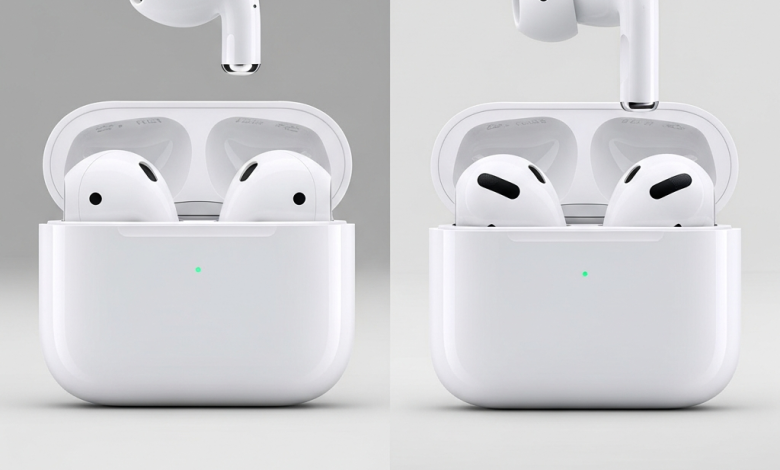
You will find the same cycle occurring every few years: You will open the charging case and notice that your old set of AirPods is becoming a little outdated. The battery life of the AirPods isn’t as long as it used to be, and you’ve heard about newer models that feature things you have a hard time imagining. Well, here comes the new AirPods 4, and whether this new model is really an evolution or instead a must-have has become even more exciting because now there are two different types of AirPods 4 available from Apple now: one of those types offers Active Noise Cancellation ANC, which you wouldn’t think possible with open-ear AirPods. The AirPods 3s are still decent, but it looks like the difference between 3s and 4s lies in the silicon, a better fit, and the price difference between the basic $129 and the $179 with all of the features.
Within this guide, you will learn about every crucial feature and benefit of the new AirPods 4 versus the previous generation of AirPods to give you a clearer picture about whether to upgrade or if the previous generation still provides excellent value and functionality, especially within Apple’s tightly integrated Apple ecosystem.
1. AirPods 3 vs AirPods 4 — What’s New and What Matters
The obvious success of the classic AirPods is due in part to their timeless design. They are easily identifiable, and most people find them very comfortable since they do not block their ear canal. With 2021’s AirPods 3 launch, Apple introduced a shorter stem with force-sensor controls similar to those found on Pro models; therefore, it seems like Apple is transitioning into the present.
The first generation of AirPods 4 recently launched, and while there are some minor updates on the surface level, I would not ignore what Apple is doing here. Aside from tweaking the original design, Apple has created two different models of AirPods 4; some will have Active Noise Cancellation, while others will have the basic features of the previous model.
Instead of creating a better overall product and asking consumers whether or not they would buy one, Apple is focusing on what type of AirPods will be best for the individual user and their budget.
This comparison includes all aspects of Earbud design, Earbud design Comfort, Differences in earbud Sound Quality with the H2 Chip, and Earbud features: Noise Cancellation, Battery Life and Connection Options. This comparison will help Apple users within its Ecosystem or even non-Apple users make informed decisions about their Earbuds.
2. AirPods 3 vs AirPods 4: Design and Comfort
The moment you place an AirPods 4 in your ear, after using the AirPods 3, it’s immediately noticeable how different they feel – even just by millimetres. Apple has reduced the size of the round part of the AirPods so that they have a more slim and streamlined design for better, more natural, secure fitting. I noticed a significant improvement in stability with this new contour versus the previous version, particularly when I was involved with light activities; therefore, I see this refined contour as an ergonomic win, albeit a subtle one. The stems still have the same “force” sensor for pinch control, but they appear to be a bit more refined overall and are less intrusive on my ears.
The change in shape from the AirPods 3 to the AirPods 4 is apparent, but another notable upgrade with the AirPods 4 is durability. The AirPods 3 have a rating of IPX4 and provide protection from splashes and sweat; but with the higher IP54 rating on the AirPods 4, there is an added level of dust resistance. The added levels of dust resistance make AirPods 4 a much better companion when participating in workout routines, gardening, or other types of environments that have a lot of dust particles in the air. While it may seem small, the difference in ratings is a feature that demonstrates that the AirPods 4 have been designed to be used in many more areas than just normal everyday use.
-
Winner: AirPods 4. The AirPods 4 have won the comparison because they have a better ergonomic design (a more refined, stable fit) and a better rating for dust and water-resistance than previous generations.
3. AirPods 3 vs AirPods 4: Sound Quality and H2 Chip Improvements
This is the point where the difference between the two generations can be heard very clearly. The AirPods 3 with the H1 chip powered, provided solid, balanced audio and supported features like Personalized Spatial Audio. But AirPods 4 are equipped with the newer H2 chip which results in a real upgrade in the listening experience. The sound, as the result of the pairing with the redesigned acoustic architecture, is deeper and more detailed. The bass is more dominant and has more impact, while the overall sound feels fresher and more inviting. The point is not simply to increase the power, but to improve the clarity and the depth of the sound.
The H2 chip also makes the audio processing more intelligent. Adaptive EQ adjusts the music being played to the ear shape of the user in real-time, and Voice Isolation uses the most advanced computational audio technology to make the caller’s voice the clearest one even if there is wind or noise. Both generations may have the immersive audio formats, but the foundation for these features is more sophisticated in the latest model. Thus the user can enjoy a much more advanced and immersive experience of music, movies, and calls.
- Winner: AirPods 4. The upgrade from the H1 to the H2 chip provides an overall clearer and more consistent audio fidelity, bass response, and also intelligent sound processing.
4. AirPods 3 vs AirPods 4: Features, Controls, and Siri Interactions
Firstly, the control method of the two is almost the same: a pinch on the stem for play/pause or answering calls. However, if you look deeper, you will find that the AirtPods 4 have smarter and more contextual features. The most important feature added is Siri Interactions. Siri can tell you the name of the caller and ask if you want to answer the call when it is coming in. Instead of speaking, you can simply nod your head “yes” to confirm or shake it “no” to reject the call. It is a very natural and hands-free way that you can use to manage notifications without needing to speak.
On the other hand, features such as Conversation Awareness can completely change the game for the ANC device. When you start a conversation, the earbuds automatically lower the media volume and switch to Transparency mode, thus making it possible for you to talk without the hassle of taking off an earbud. However, if you are a car singer, you might want to be careful not to trigger it by mistake! What’s more, the AirPods 4 have the simple “Siri” wake word in addition to “Hey Siri,” and this change makes them compatible with the latest voice assistant standards by Apple.
- Winner: AirPods 4. The set of contextual features, in particular, Siri Interactions and Conversation Awareness (on the ANC model), greatly simplifies and makes more natural the interaction with your devices and the outside world.
5. AirPods 3 vs AirPods 4: Noise Cancelling and Audio Performance
The loudest dividing line by far is this: the AirPods 3 don’t feature any noise cancellation at all, only their open-ear design. On the other hand, the newly designed AirtPods 4 with Active Noise Cancellation bring a real and efficient ANC system to the smallest Apple earphones for the first time. That said, it’s quite a way from a deep in-ear muffle to the rather weak noise isolation of open-ear ones, but still this is certainly not a device that has been made just for show. Apple relies on its microphones and the H2 chip’s processing power to counter the usual, low-frequency sounds related to an airplane engine, a train or an HVAC unit in an office environment.
It really does have a positive impact on such sources of situations which at times can be overly irritating or a pont of trouble from where music or podcasts can be listened to at a volume that is lower and safer. Individuals who are turned off by the closed feel offered by silicone tips but yet would like some relief of which the ear is still somewhat accessible now have the choice of a revolutionary option at airpods 4 with active noise cancellation. The latter represents a different category of noise control–effective noise reduction without isolation–that airpods 3 are just incapable of.
- Winner: AirPods 4 (ANC model). This is a brand-new feature altogether. The only decision if noise reduction is of utmost importance is whether to opt for the ANC model.
6. AirPods 3 vs AirPods 4: Battery Life and Charging Case
A few things a person might want to think over is right here. The AirPods 3 feature a single battery life that is a little longer than the standard one, which is approximately 6 hours of listening. Standard AirPods 4 are rated for 5 hours of use, whereas the ANC model with noise cancellation enabled has a battery life of up to 4 hours. However, the total time which the case can provide the earbuds with a full charge is around 30 hours (20 hours for the ANC model with ANC on). Usually, that one-hour difference between the two standard models is quite noticeable during marathons but it is at times softened by the quick-charge feature (5 minutes put in the case equals about an hour of listening).
Moreover, the case has also changed. If the volume of the AirPods 4 case is compared to that of its predecessor, it turns out that the new one is smaller by more than 10% and thus it is easier to put it in a pocket. Nevertheless, it should be kept in mind that only the Airpods 4 ANC model is equipped with wireless charging. The regular AirPods 4 case can be charged only via USB-C. Furthermore, the ANC model’s case has a small speaker that can be used to emit a sound locating a device via the Find My app in case you have trouble finding it.
- Winner: Draw. The AirPods 3 can be considered as winners in terms of earbud battery life only. The AirPods 4 (especially the ANC model) are better in terms of case features and portability. The decision is made by you as to this round depending on whether you put the most single use or the best case utility first.
7. AirPods 3 vs AirPods 4: Connectivity and Software Features
Both can pair quickly with an Apple device, change the device by which you use the AirPods, and allow two pairs of headphones to get the same sound. In comparison to the third generation, AirPods 4 use a newer Bluetooth version, which is 5.3, while the 3rd generation uses Bluetooth 5.0. This means that a more stable connection, thus a bit longer range and better power consumption, can be possible.
The software lead is also there only for the immediate future. The 4th generation of AirPods is equipped to implement the latest iOS features. To illustrate, they support Live Translation (on the ANC model), an advanced Apple Intelligence feature, which can translate in real-time the speech during a face-to-face conversation. Will both models get software updates? Yes, but the AirPods 4 with the H2 chip will be able to utilize the next wave of computational audio and AI-driven features from Apple to the fullest.
- Winner: AirPods 4. The fourth generation with Bluetooth 5.3 and a chipset made for features like Live Translation is a step ahead in the Apple software ecosystem.
8. Apple AirPods 4 vs AirPods 3: Price and Value for Money
It is quite easy to see how one can be persuaded to buy the product of a newer generation. The line of AirPods 4 has basically taken over that of AirPods 3 from the company, and a new standard model retails for only $129. So, putting things simply, you can get more with less for a newly released product: a lower price, a higher quality with a redesigned product, and brand-new features. The AirPods 4 with noise cancelling sell for $179.
Suppose that you get a great deal on the third generation of AirPods (more precisely: a heavily discounted price due to retailers trying to clear their stock). In that case, you can be sure that they are a real bargain if you only want the traditional AirPods experience with a few modern features such as force control and Spatial Audio. Nevertheless, it is difficult to justify at or near their original price that you should buy a new generation instead of an old one. The difference in the price of the performance version of the earbuds and that of the standard ones, which is only $50, is the most essential upgrade in the lineup, as it brings out a new feature set capable of changing how the earbuds can be used.
- Winner: AirPods 4 (Standard Model). For most new buyers, the $129 AirPods 4 offer the best balance of new technology and price. If noise reduction is a particular need, then the ANC model is a premium worth paying for.
Final Verdict: AirPods 3 vs AirPods 4 — Which Should You Buy?
The decision on which AirPods to purchase depends solely upon what you prioritize and how much money you can invest in them. If you will be purchasing AirPods 4 today, you will want to choose the standard $129 model as it has the most significant improvements over the AirPods 3 (in terms of sound quality, fit, and features) at a very good price. It is an easy choice for everyone to make without remorse.
But this does not mean that your search is over. If you travel frequently, use a noisy café while working, or just want the ability to turn down the “noise” of the world around you, then you should consider spending an additional $50 for the $179 AirPods 4 with Active Noise Cancellation (ANC). The ANC is an amazing feature to have for an open earbud, and the addition of ANC represents the most dramatic functional improvement made in this comparison.
The AirPods 3 are now a clearance rack item, and you should only consider purchasing them if you can find them at a significant price reduction and if you are sure that you do not want or need any of the noise-canceling features or the most recent features available on the market. Everyone else should look toward the future and the AirPods 4, which are by far the better value.
